Before the helmet conversation: what active care can do
If a clinician mentioned a helmet for your baby, you are probably feeling pressure to make a quick decision. The conversation tends to move fast, orthotics clinics tend to be confident, and the timeline language can make it feel like the window is already closing.
There is more to this decision than most parents are told before they walk into that appointment. Helmets are a real tool for the right situation. Most babies do not need one when the underlying patterns driving the head shape change are addressed early and well. This page walks through what active cranial care actually does, what the helmet conversation often leaves out, and when a helmet is genuinely the right call.
What is actually causing the head shape change
A baby’s head changes shape from pressure over time. Where that pressure comes from matters more than the helmet conversation usually acknowledges.
External pressure is the part most people focus on: back-sleeping, time in car seats and bouncers, how the baby is positioned during feeding and play. Repositioning and tummy time address this part.
Internal pressure is the part that often gets skipped. When a baby has subluxation in the upper cervical spine and cranial bones, or a head-turning preference rooted in birth-related strain, the baby gravitates toward one position because that is what the body comfortably allows. The flat spot is the visible result. The underlying subluxation is what set it in motion.
A helmet redirects external pressure as the skull grows. It does not address the internal subluxation. This is why many babies who finish helmet therapy still have the head-turning preference, the feeding asymmetry, or the upper neck subluxation that started the pattern. The shape changes. The underlying cause does not get addressed.
What active cranial care addresses
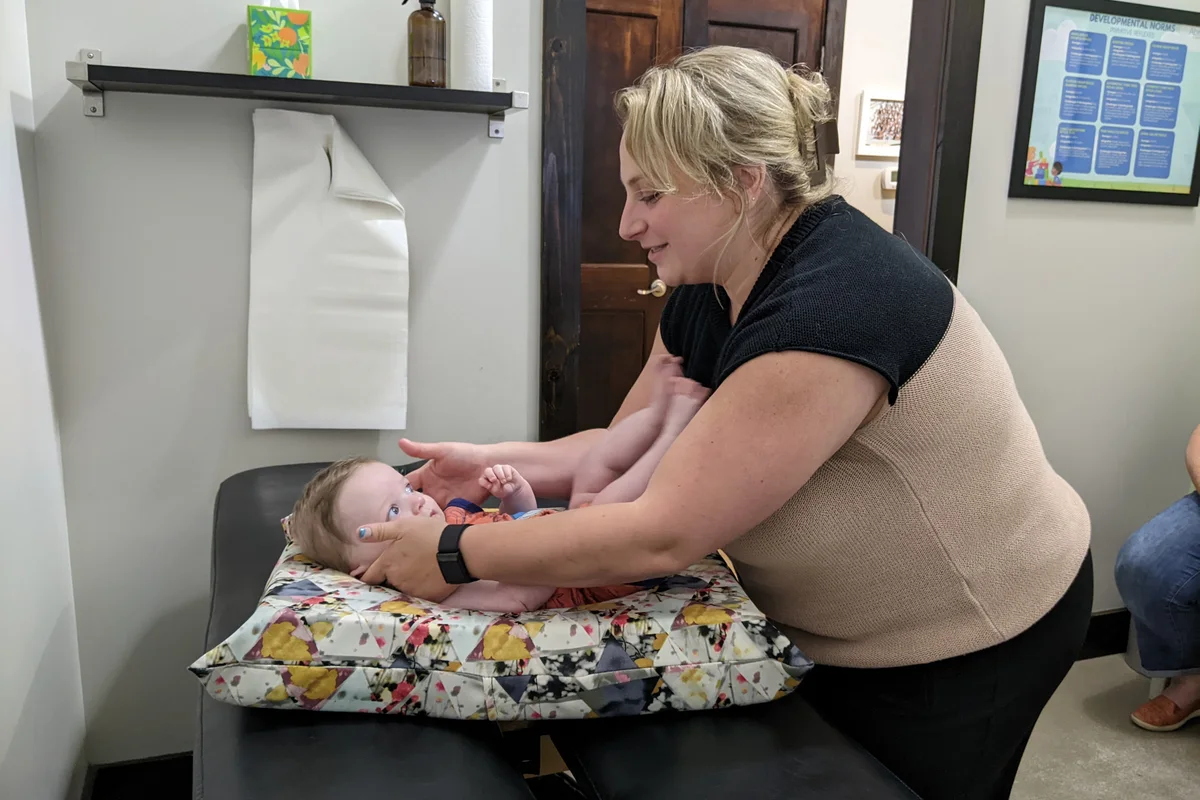
Active cranial care, done by a chiropractor specifically trained in pediatric cranial work, looks at the whole pattern rather than the surface shape. A thorough assessment includes:
- The cranial bones themselves, looking for subluxation in how they articulate and move
- The upper cervical spine, where birth-related strain often sets down patterns that persist for months
- The pattern of head-turning preference and any associated torticollis
- Feeding mechanics, since tongue position and palate shape both affect and are affected by cranial patterns
- Sleep position, regulation, and any signs that the nervous system is contributing to the picture
Hands-on care for an infant is gentle, specific, and nothing like adult chiropractic adjustments. The work is slow, light-touch, and aimed at giving the cranial bones and upper neck the freedom to move the way they were designed to.
When that work begins early, the trajectory often shifts. Babies start turning their heads both ways. Tummy time gets easier. Feeding evens out. The shape changes follow.
What helmets actually do, and what they do not
A cranial orthotic, worn 23 hours a day for several months, redirects growth as the skull expands. In a baby whose skull is still in an adaptable phase and whose measurement is significant, that can produce real changes in shape.
A helmet does not address:
- The upper cervical or cranial subluxation that may be driving the head-turning preference
- The feeding asymmetry that often accompanies the shape change
- The sleep and nervous system patterns that show up alongside positional asymmetry
- Whatever caused the baby to favor one side in the first place
A helmet also carries real considerations that parents are not always told about up front:
- Skin breakdown, hot spots, and pressure sores require close monitoring
- Hygiene challenges, especially in warm weather
- Reduced skin-to-skin contact during a developmental window where touch matters
- Cost, often $2,000 to $4,000, and frequently not covered by insurance
- Possible regression of the shape after the helmet comes off if the underlying pattern was not addressed
These are real trade-offs that deserve to be part of the conversation before a decision is made.
When a helmet is the right call
Helmets are a real tool, and there are situations where they belong in the plan. The clearest cases:
- CVAI is significantly elevated, typically well above 8.75%, and not improving with consistent active care
- The baby is inside the active growth window and care has been tried for several weeks without measurable change
- There is a structural pattern that active care alone cannot redirect within the available window
- The combined approach, active care alongside a helmet, is the most likely path to a good outcome
A baby at 6.5% CVAI who has not yet received active cranial care is not a helmet candidate. That baby is a candidate for the work that comes first.
If your baby is already in a helmet
A helmet and cranial chiropractic care are not an either/or decision. They work on different parts of the same problem.
The helmet redirects how the skull grows from the outside. A craniopathy-trained chiropractor addresses the subluxation that influenced the shape in the first place. When both are happening at the same time, the helmet tends to work more efficiently and the results tend to hold better after it comes off.
If your baby is currently in a helmet and has not been seen by a craniopathy-trained chiropractor, that is worth discussing at your next visit. The window the helmet is working within is the same window where cranial care makes the most difference.
The growth window
Care can and should begin from birth. Starting early gives your baby the most options.
The posterior fontanelle, the soft spot at the back of the skull, closes between 2 and 4 months. This is the earliest and most responsive window for cranial care. The skull continues to develop and remodel beyond that point, but the patterns established in these first months shape everything that follows.
A craniopathy-trained chiropractor monitors progress through this window, adjusts the care plan as your baby grows, and gives you clear guidance at every step. The earlier care begins, the more the body can do with it.
What to bring to your next visit
If a helmet has been suggested for your baby, these questions will make the conversation more useful:
- What is the actual CVAI measurement, not just the recommendation?
- What active cranial care has my baby received, and for how long?
- Is the measurement improving, getting worse, or holding steady?
- Has the head-turning preference, feeding pattern, or underlying subluxation been addressed, or only the visible shape?
If those questions have not been part of the conversation yet, they should be. A clear picture of where your baby is and what has already been tried leads to better decisions than a single measurement ever can.
The goal is the same for every family: a more balanced skull, a more comfortable baby, and a developmental foundation that supports what comes next. For most babies, getting there starts with understanding why the head shape changed in the first place and addressing it directly.
Looking for a craniopathy-trained chiropractor?
The practitioners behind this resource work with families on exactly these patterns. Find someone trained in cranial pediatric care near you.